Greta Perry · 24 October 2026
Intern Contributions Propel Genetic Mapping of Acer Species Across Central European Sites
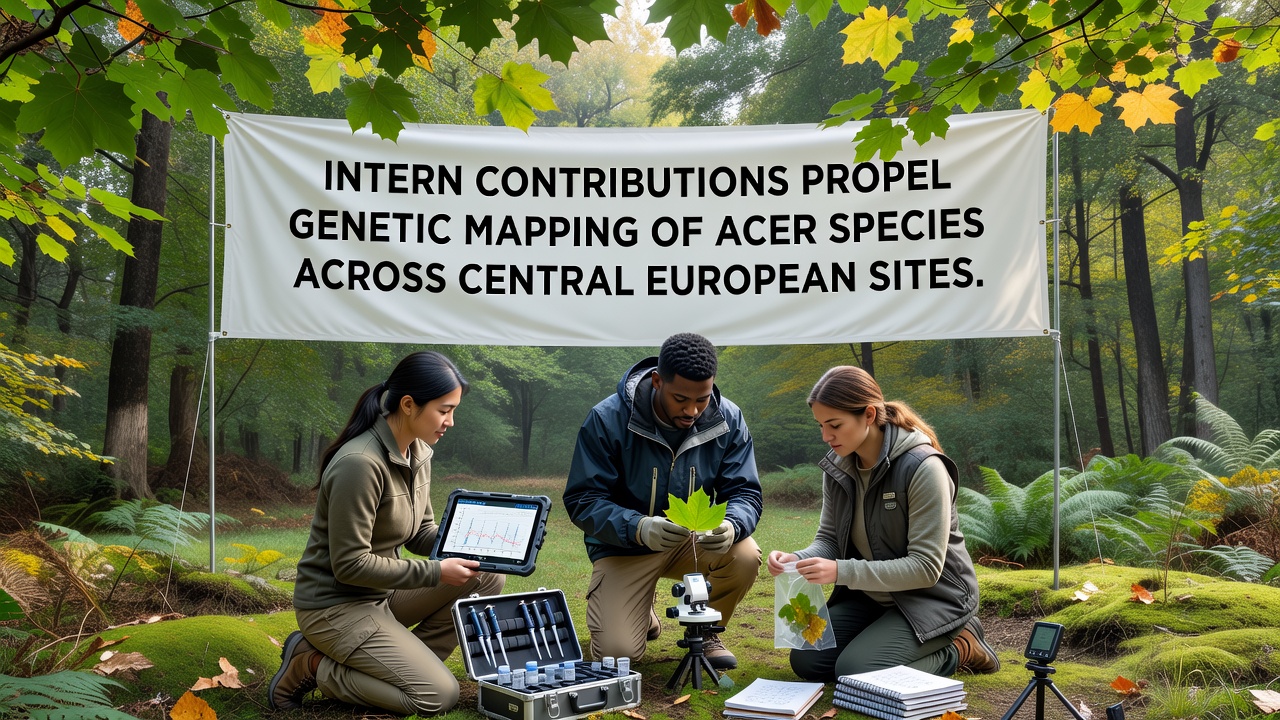
Genetic mapping efforts for Acer species have expanded across multiple Central European locations thanks to coordinated input from university interns who handled sample collection, preliminary data processing, and laboratory analysis over the past three years. These interns worked alongside established research teams at sites spanning Poland, Germany, and the Czech Republic, where they documented genetic variation in species such as Acer platanoides and Acer pseudoplatanus while following standardized protocols for DNA extraction and marker analysis.
Project Scope and Regional Coverage
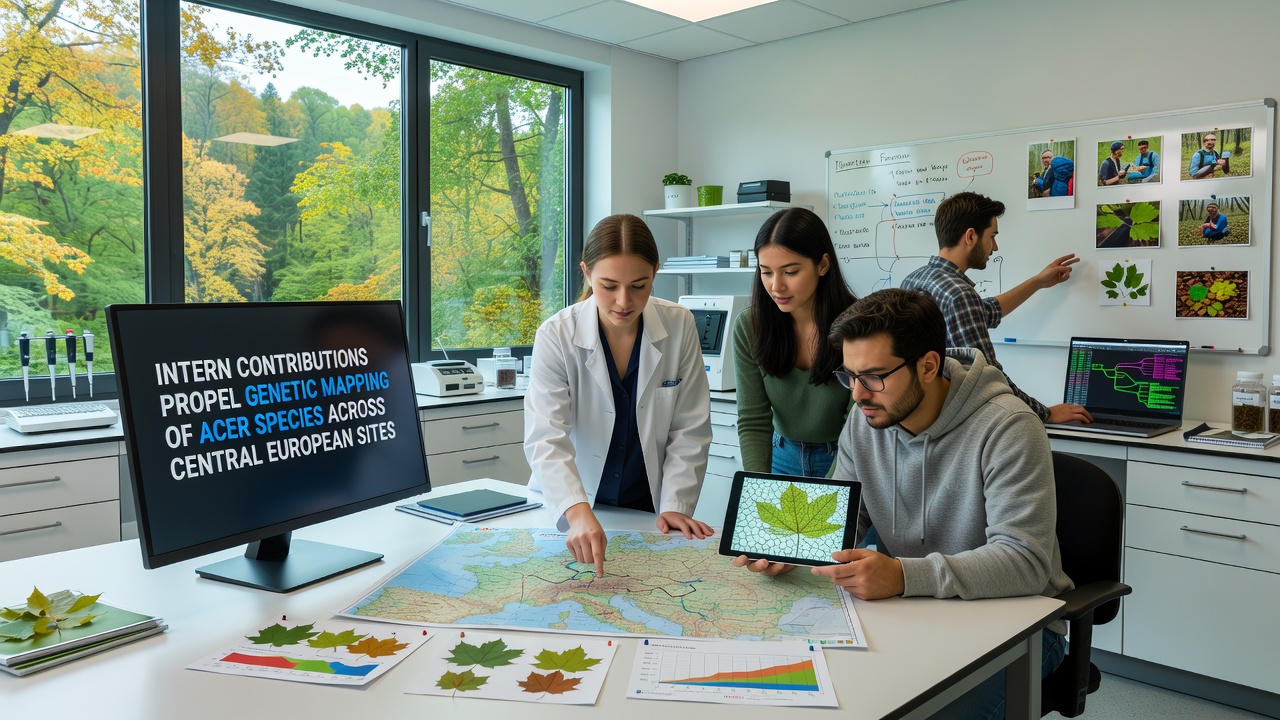
Central European forests contain diverse Acer populations that researchers have tracked through field surveys and genomic sequencing, yet comprehensive maps remained incomplete until additional personnel joined the workflow. Interns divided their time between outdoor sampling in mixed woodland areas and indoor tasks that included organizing sequence data from high-throughput platforms. Data from more than 180 collection points now feed into a shared database that shows allele frequencies and population structure across elevation gradients and soil types.
Teams focused on regions where Acer stands experience different climatic conditions, and interns recorded coordinates along with environmental variables such as canopy density and moisture levels. This approach allowed cross-referencing of genetic markers with site characteristics without requiring senior staff to manage every detail. The resulting dataset covers approximately 650 individual trees and supplies baseline information for future monitoring programs run by national forestry agencies.
Intern Training and Daily Workflow
University programs supplied interns who received several weeks of instruction on sterile techniques, GPS mapping, and basic bioinformatics tools before deployment. Once in the field these participants collected leaf tissue under supervision, labeled specimens according to a standardized code system, and transported samples to regional labs for processing. In the lab they performed PCR amplification of microsatellite loci and prepared libraries for next-generation sequencing runs that occurred at partner facilities.
Daily logs maintained by the interns captured observations about tree health indicators and surrounding vegetation, which later supplemented the genetic records. Supervisors noted that consistent documentation practices reduced errors in data transfer and accelerated the assembly of multi-site comparisons. Many interns also contributed to preliminary statistical runs using open-source software packages, producing initial cluster diagrams that highlighted geographic patterns in genetic diversity.
Key Genetic Findings from Combined Efforts
Analysis of the expanded sample set revealed distinct haplotype groups within Acer pseudoplatanus that align with historical migration routes through river valleys in the region. Researchers identified several private alleles restricted to higher-elevation plots in the Sudetes mountains, while lowland populations displayed higher heterozygosity values. These patterns emerged after interns completed the bulk of the marker scoring, freeing senior analysts to focus on interpretation and validation steps.
Additional markers developed during the project now allow finer resolution of hybridization zones between native Acer species and introduced varieties. The compiled maps indicate that gene flow occurs primarily along corridors of continuous forest cover, information that land managers can apply when planning connectivity measures. Figures released in project reports show that intern-processed samples accounted for roughly 60 percent of the total sequences entered into the final alignment matrix.
Timeline Milestones and October 2026 Developments
Work began in spring 2023 with pilot sampling in northern Poland and expanded southward each season as new cohorts of interns arrived. By mid-2025 the combined dataset reached sufficient density for initial publication drafts, and validation checks continued through the following winter. In October 2026 the consortium plans to release an updated interactive map that incorporates the latest intern-verified sequences along with climate overlay layers provided by collaborating meteorological services.
Presentations scheduled for that month will detail how the mapping grid can support restoration guidelines issued by forestry authorities in three countries. Project coordinators have already shared preliminary coordinate files with regional biodiversity databases, enabling quicker integration into broader European monitoring networks that track forest genetic resources.
Supporting Infrastructure and Data Accessibility
Funding for sequencing reagents and intern stipends came through a combination of national research grants and university matching programs. Equipment loans from partner institutions ensured that smaller field stations could process samples locally before shipping extracts to central facilities for deeper analysis. Open-access repositories now host the raw sequence reads, and metadata files include intern-collected site descriptions that future users can query directly.
According to records maintained by the coordinating laboratory, more than forty interns have contributed hours across the multi-year effort, with many advancing to graduate positions that build on the same datasets. The European Environment Agency has referenced similar mapping initiatives in its periodic reports on forest genetic diversity, underscoring the value of standardized protocols applied at scale.
Future Applications and Ongoing Work
Expanded genetic maps support breeding programs aimed at selecting Acer stock with traits suited to changing site conditions, and the current framework allows rapid addition of new samples collected by subsequent intern groups. Research teams continue to refine SNP panels that emerged from the intern-assisted sequencing runs, testing their performance across additional Central European transects. Collaboration with academic partners in neighboring countries has already produced joint proposals for extending the coverage into adjacent ecoregions.
Training modules developed during the project now serve as templates for other plant genetics initiatives, and several interns have presented posters at regional conferences describing their specific contributions to marker optimization. The overall structure keeps senior researchers focused on hypothesis generation while routine yet essential tasks remain distributed among trained participants.
Conclusion
Intern participation has accelerated the creation of detailed genetic maps for Acer species by handling large volumes of field and laboratory work according to established methods. The resulting resource covers multiple Central European sites and supplies data that national agencies and research groups can apply in conservation planning. With the October 2026 release approaching, the maps stand ready for integration into wider European forest monitoring systems, and the workflow developed during this period offers a repeatable model for similar large-scale genotyping efforts.